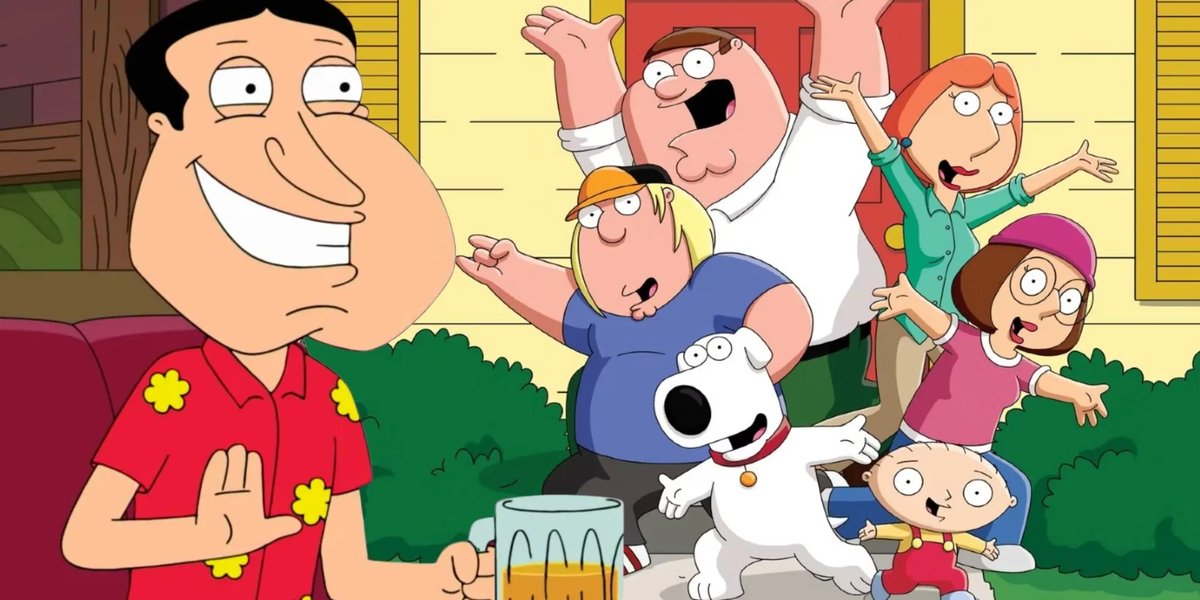
Welcome to Quahog! If you’re a new viewer dipping your toes into the wild, irreverent world of Family Guy, you’re in for a treat—and perhaps a bit of a challenge. With a staggering 24 seasons and counting, figuring out where to begin with this animated behemoth can feel like navigating a cutaway gag without a map. But don't worry, you don't need to start from the very beginning to appreciate its genius. This guide will walk you through the essential Family Guy episodes for new viewers, ensuring you hit the high notes, understand its humor, and truly enjoy the ride.
Family Guy isn't just a show; it's a cultural phenomenon that reshaped adult animation, inspiring a generation of shows from Rick and Morty to Big Mouth. While its critical standing might occasionally play second fiddle to The Simpsons, its impact is undeniable, proving so popular it was resurrected after an initial cancellation. This curated list focuses on the episodes that define its comedic style, showcase its best characters, and offer a clear understanding of why it remains a beloved, albeit controversial, staple.
At a Glance: Your Quick Start Guide to Quahog
- Don't Start at Episode One: The show truly finds its footing a few seasons in. Our list prioritizes impact over strict chronology.
- Embrace the Absurd: Family Guy thrives on non-sequiturs, cutaway gags, and surreal humor. Lean into it.
- Meet the Griffins: Peter, Lois, Meg, Chris, Brian, and Stewie are your guides. Understanding their basic personalities is key.
- Quality Varies: Like any long-running show, Family Guy has its ups and downs. This guide focuses on its undeniable peaks.
- Road to... Episodes are Gold: Pay special attention to the Brian and Stewie "Road to" adventures; they're almost always highlights.
- Genre Parodies are Brilliant: Many of its best episodes are clever, detailed spoofs of movies and TV.
Why Family Guy Still Matters (And Why It's Hard to Start)
Family Guy's journey has been anything but conventional. It exploded onto the scene in 1999, quickly carving out its niche with rapid-fire jokes, pop culture references, and a distinct brand of dark, often offensive humor. By Season 3, it had amassed a loyal following, yet Fox pulled the plug. But a passionate fanbase and impressive DVD sales—a rarity for TV shows at the time—prompted an unprecedented revival in 2005. This "comeback kid" story infused the show with a new meta-awareness, often using its own cancellation as fodder for jokes.
This unique trajectory means the show has distinct eras. Early seasons are often praised for their fresh originality and tighter storytelling, while the post-cancellation years saw an explosion of meta-humor, bolder cutaways, and a more pronounced reliance on Brian and Stewie as the dynamic duo. Later seasons, while still delivering laughs, can sometimes be hit-or-miss, leading many new viewers to feel overwhelmed. That's why a handpicked list of essential episodes is crucial; it allows you to bypass the filler and jump straight into the heart of what makes Family Guy great, giving you a solid foundation for how Family Guy influenced adult animation.
Navigating the Early Years: Foundation Stones of Genius (Seasons 1-3)
The first three seasons, often considered the show's "golden age" by purists, set the stage for everything that followed. These episodes are sharp, often experimental, and brimming with the original comedic spirit that made Family Guy stand out. They’re a fantastic starting point for understanding understanding Family Guy's unique humor.
"Da Boom" (Season 2, Episode 3, 1999)
This is an absolute must-watch for new viewers. "Da Boom" isn't just an early classic; it's an incredibly original, sprawling episode that sees the world plunge into chaos due to Y2K. The Griffin family's journey through a post-apocalyptic wasteland is packed with surreal humor and introduces one of the show's most iconic recurring gags: the epic Peter vs. Giant Chicken fight. It’s a masterclass in pushing a ridiculous premise to its comedic limits, demonstrating the show’s willingness to go anywhere for a laugh, even in its nascent stages.
"Death Is a Bitch" (Season 2, Episode 6, 2000)
Ever wondered what happens when Death sprains an ankle? Peter Griffin temporarily takes over his duties, of course. This high-concept episode brilliantly blends dark humor with slapstick comedy, offering a truly unique spin on classic cinematic themes (think Ingmar Bergman's The Seventh Seal, but with more fart jokes). It showcases the show's ability to take a fantastical idea and run with it, delivering both silly humor and surprisingly clever commentary. Plus, it introduces Death as a recurring character, a surprisingly grounded and often hilarious figure.
"E. Peterbus Unum" (Season 2, Episode 18, 2000)
If you want to understand Peter Griffin's childlike, often absurd sense of entitlement, look no further. In "E. Peterbus Unum," Peter declares his household a sovereign nation, "Petoria," after a zoning dispute. This episode epitomizes Family Guy's early strength: taking a simple, ludicrous premise and escalating it into a geopolitical farce. It’s charmingly immature and a great example of the show's characters reacting to increasingly outlandish situations with a straight face.
"Let's Go to the Hop" (Season 2, Episode 14)
Packed with iconic moments and rapid-fire storytelling, this episode is a pure shot of early Family Guy comedic prowess. Peter goes undercover in Meg’s high school to expose drug dealers, leading to predictable chaos. It’s a standout for its sheer density of jokes and surreal cutaways, demonstrating the show's ability to blend character-driven comedy with its signature brand of non-sequitur humor. This is the kind of episode that will have you asking, "Did they really just do that?" multiple times.
"To Love And Die In Dixie" (Season 3, Episode 12)
This episode is a fantastic blend of crime comedy and satirical jabs at Southern culture. When Chris witnesses a crime, the Griffin family relocates to the Deep South under witness protection. It's a fast-paced romp that not only delivers classic Family Guy humor but also manages to inject actual plot stakes, making for a surprisingly engaging narrative alongside the elevated slapstick gags. It’s a testament to the writers’ ability to craft a cohesive story while maintaining their zany style.
"Brian Wallows and Peter's Swallows" (Season 3, Episode 17, 2002)
Prepare for a rare moment of genuine sweetness from Family Guy. This episode is unusual for its unexpected sentimentality. Brian connects with an elderly woman during community service, while Peter (yes, Peter) cares for baby birds nesting in his beard. It's a touching, one-off story that showcases the show's capacity for heart, proving it's not always about shock value. It’s a great example of a guide to the iconic characters showing surprising depth, particularly Brian's thoughtful side.
"Road to Europe" (Season 3, Episode 20)
The "Road to" episodes starring Brian and Stewie are legendary, and this one helped solidify their incredible comedic rapport. The duo embarks on a journey across Europe, leading to musical numbers, cultural misunderstandings, and hilarious hijinks. The B-story, featuring Peter and Lois's misadventures at a KISS concert, is equally memorable and funny. This episode is a perfect entry point into the unique dynamic between the intelligent, cynical dog and the evil, articulate baby, a relationship that would become central to the show.
"Family Guy Viewer Mail #1" (Season 3, Episode 21)
An anthology episode, this gem features three short stories supposedly based on "viewer suggestions." The standout segment is a brilliant Little Rascals parody, ingeniously incorporating Scooby-Doo elements. Despite its short runtime, it's consistently cited as one of the show's funniest bits, a testament to its clever writing and ability to spoof beloved franchises with affection and irreverence. Anthology episodes like this often serve as creative playgrounds, and this one hits all the right notes.
The Resurgence and Refinement: Post-Cancellation Powerhouse (Seasons 4-7)
After its miraculous resurrection, Family Guy returned with a renewed vigor and a bolder, more self-aware comedic style. These seasons are often seen as the show's second golden age, where it embraced its meta-status and pushed boundaries even further.
"North by North Quahog" (Season 4, Episode 1, 2005)
This is a monumental episode, not just because it's the first after the show's cancellation, but because it perfectly encapsulates Family Guy's post-2005 style. A brilliant parody of Alfred Hitchcock’s North by Northwest, it’s packed with biting fourth-wall humor, lampoons the movie industry, and critically targets Mel Gibson. This episode set the tone for the show's confident, more expansive storytelling, proving its return wasn't just justified but triumphant. It's essential viewing for understanding the show's evolution.
"Petarded" (Season 4, Episode 6, 2005)
"Petarded" showcases Family Guy's trademark crude, edgy humor at its best. When Peter discovers he is intellectually disabled, he shamelessly exploits the fact, leading to predictably hilarious and problematic situations. The episode is recognized for effectively walking the line, delivering humor that's provocative without becoming overly crass. It’s a fantastic example of the show taking a sensitive topic and spinning it into audacious comedy, a hallmark of its enduring appeal.
"PTV" (Season 4, Episode 14, 2005)
Considered a masterpiece by many, "PTV" is a hilarious and surprisingly insightful commentary on network TV restrictions and censorship. Peter's frustrations with the FCC escalate to the point where they begin censoring his entire life. This episode is a standout piece of animation for its clever writing, balancing crude humor with ridiculousness, and offering a sharp critique of media control. It’s meta-commentary done right, and it solidified Family Guy's reputation for biting satire. If you want to dive deeper into the ongoing debate between Family Guy and The Simpsons regarding cultural impact, this episode provides rich material.
"Blue Harvest" (Season 6, Episode 1, 2007)
You haven't truly experienced Family Guy until you've seen its Star Wars parodies. "Blue Harvest" is a double-length, full-on, frame-for-frame parody of the original 1977 Star Wars movie. It flawlessly integrates Family Guy humor and characters into iconic roles, creating a "true event" episode that's both a loving tribute and a hilarious send-up. This episode was so successful it spawned two sequels, making it a cultural phenomenon in its own right. It's a fantastic entry point to the show's ability to commit to a bit on an epic scale, and a must-see for fans of either franchise. Many consider it among the beloved Star Wars parodies the show has created.
"Three Kings" (Season 7, Episode 15)
Another excellent anthology, "Three Kings" spoofs three Stephen King classics: Stand By Me, Misery, and The Shawshank Redemption. What makes this episode unique is how it blends genuine affection for King's work with the show's signature zany humor. It acts as both a loving tribute and a sharp parody, demonstrating Family Guy's sophisticated approach to pop culture references. It’s a great example of the show at its peak, executing a complex concept with comedic precision.
Evolving Legends: Later Season Standouts & Genre Benders (Seasons 8-11)
Even as Family Guy settled into its long run, it continued to deliver exceptionally creative episodes, particularly those focusing on Brian and Stewie's adventures and ambitious genre spoofs.
"Road To The Multiverse" (Season 8, Episode 1, 2010)
This is another iconic "Road to" episode and a genuinely inventive piece of television. Brian and Stewie travel to numerous alternate realities after Stewie's time machine malfunctions, leading them through worlds where Christianity never existed, everyone has an extra arm, or society is run by dogs. Praised for its sharp wit and genuinely clever plot, it was an early comedic depiction of the multiverse concept in pop culture, long before it became a cinematic trend. It’s endlessly rewatchable for its sheer creativity.
"Road To The North Pole" (Season 9, Episode 7, 2010)
Brian and Stewie embark on a journey to the North Pole, only to discover overworked elves, a despondent Santa Claus, and the grim reality behind Christmas. This double-length episode is a savvy, ruthless satire of overconsumption and environmental impacts, adeptly balancing dark humor with surprisingly sweet moments. It showcases the incredible chemistry between Brian and Stewie, highlighting their roles as the show's moral compass and agents of chaos, often simultaneously. It’s a holiday special unlike any other.
"And Then There Were Fewer" (Season 9, Premiere)
A true standout, this one-hour murder mystery parody is based on Agatha Christie's And Then There Were None. It takes on a darker, more cinematic tone than typical episodes, ingeniously spoofing the genre by killing off a large cast of minor characters (and some major ones!). This episode demonstrates Family Guy's comedic powers at their peak, proving it can handle a complex narrative while delivering consistent laughs and genuine suspense. It’s a bold, ambitious, and highly successful endeavor.
"Back to the Pilot" (Season 10, Episode 5, 2011)
In a brilliant meta-commentary, Brian and Stewie travel back to the show’s pilot episode. What begins as a simple revisit turns complicated when they inadvertently prevent 9/11, leading to drastically worse consequences for the U.S. This episode cleverly uses the show's own evolution as a premise for comedy and poignant reflection. It's considered a highlight from its post-golden age for its sharp writing, emotional depth, and willingness to tackle sensitive topics with surprising nuance.
"Yug Ylimaf" (Season 11, Episode 4)
As the 200th episode, "Yug Ylimaf" (that's "Family Guy" backward) is a celebratory and incredibly clever entry. Stewie's time machine malfunctions, causing time to run backward for Brian and Stewie, threatening Stewie's very existence. It’s an ingenious sci-fi spoof with a genuinely clever premise, using the backward progression of time to create unique comedic scenarios and high stakes. This episode is a testament to the show's enduring creativity and its ability to continually invent fresh, complex plots.
Beyond the List: How to Continue Your Family Guy Journey
These episodes offer a fantastic cross-section of Family Guy's best work, showcasing its various comedic styles, character dynamics, and thematic explorations. Once you've devoured these, you'll have a much clearer sense of what aspects of the show you enjoy most.
From here, you can choose your adventure:
- Deep Dive into Brian and Stewie: If you loved the "Road to" episodes, seek out others like "Road to Rhode Island" (S2 E13) or "Road to Germany" (S7 E3). Their dynamic is arguably the heart of the show.
- Explore the Meta-Humor: If you appreciated the self-referential jokes in "North by North Quahog" and "PTV," you might enjoy other episodes that break the fourth wall or comment on the show itself.
- Embrace the Gross-Out: For those who revel in Peter’s most outlandish and often disgusting antics, there’s plenty more to discover throughout the seasons.
- Catch the Pop Culture Parodies: Beyond Star Wars and Stephen King, Family Guy has spoofed countless movies, TV shows, and historical events. If these resonate, look for more.
For an even broader list that covers many more incredible entries, make sure to check out our ultimate guide to the best Family Guy episodes of all time.
Common Questions New Viewers Ask
Do I need to watch Family Guy in order?
Absolutely not! While there's a loose continuity, Family Guy is primarily a gag-driven show. Each episode largely stands on its own. Watching the essential episodes we’ve listed will give you all the context you need without feeling lost. You'll quickly pick up on the iconic characters and their core personalities.
Does the quality really drop in later seasons?
Like many long-running animated series, Family Guy has had fluctuating quality. Its early seasons and the immediate post-cancellation era (roughly Seasons 4-8) are widely regarded as its strongest. While later seasons might have more hit-or-miss episodes, they still produce brilliant gems, often focusing on the Brian and Stewie dynamic or ambitious parodies. Don't write off later seasons entirely; just know that the ratio of truly essential episodes might be lower.
What about the spin-offs like The Cleveland Show or American Dad?
The Cleveland Show was a direct spin-off focusing on Cleveland Brown and his new family. It ran for four seasons. While it shares some DNA with Family Guy, it developed its own tone. American Dad! is a completely separate creation by Seth MacFarlane and his team, often seen as having a more consistent comedic voice and developing into a unique, acclaimed show in its own right. You don't need to watch them to enjoy Family Guy, but they're there if you want more of MacFarlane's style.
Is Family Guy too offensive for some viewers?
Family Guy is renowned for its edgy, often controversial humor, tackling sensitive topics with irreverence. It uses stereotypes, dark humor, and shock value extensively. If you're easily offended by crude jokes, cultural insensitivity, or controversial takes, Family Guy might not always be your cup of tea. It pushes boundaries, and that's part of its appeal for many, but it's good to go in knowing what to expect.
Your Next Steps in Quahog
You’ve got your viewing roadmap! Now, it's time to dive into the irreverent world of the Griffins. Most of these essential Family Guy episodes for new viewers are readily available on streaming platforms. Pick an episode from our list that sounds most intriguing, grab some popcorn, and prepare for a unique blend of surreal humor, satirical commentary, and unforgettable characters. Enjoy the journey, and welcome to the family!