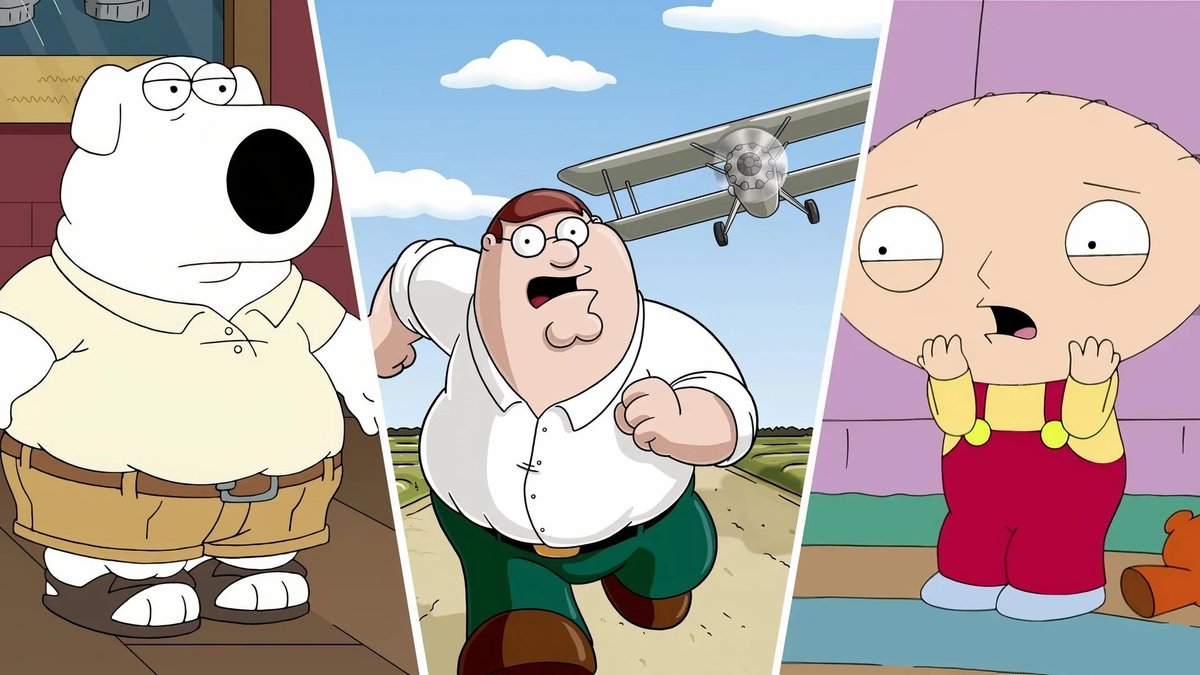
For over two and a half decades, Family Guy has been a staple of animated comedy, delivering its signature blend of outrageous humor, sharp pop culture commentary, and surprisingly heartfelt moments. With more than 420 episodes under its belt and new seasons on the horizon, it’s a show that continues to evolve, yet consistently brings us back to the chaotic, unforgettable lives of the Griffins and the quirky residents of Quahog.
But what makes an episode truly stand out? Often, it’s when one of the main characters—Peter, Lois, Meg, Chris, Brian, or Stewie—takes center stage, allowing their unique personalities and often bizarre motivations to drive the narrative. If you’re looking to dive deep into the best Family Guy episodes by character focus, you’ve come to the right place. We���re cutting through the noise to bring you a definitive guide, highlighting the episodes where your favorite Quahogians truly shine, for good or for utterly questionable reasons.
At a Glance: Your Guide to Quahog's Character-Driven Gems
- Discover Signature Storylines: Learn which episodes perfectly encapsulate each character's essence.
- Revisit Iconic Moments: Find the origin stories of beloved gags and unforgettable character arcs.
- Explore Hidden Depths: See how even the most one-dimensional characters occasionally reveal surprising layers.
- Navigate the Family Guy Universe: Understand the show's evolution through its core cast.
- Curate Your Rewatch List: Pinpoint episodes that offer the most rewarding experience for fans of specific characters.
Why Quahog Continues to Captivate: The Enduring Appeal of the Griffins
Family Guy, the brainchild of Seth MacFarlane, burst onto screens in 1999 and quickly carved out its niche. Known for its quick-fire cutaways, boundary-pushing jokes, and a willingness to satirize absolutely everything, it quickly became a cultural phenomenon. It's a show that thrives on consistency in its core cast while constantly pushing the envelope in its storytelling. From the global ambitions of an evil baby to a talking dog's existential crises, the characters are the engine that drives its long-lasting success.
While the sheer volume of episodes can feel daunting, focusing on character-centric stories allows you to appreciate the nuanced (and often hilarious) development of these animated icons. Whether you're a long-time fan or just dipping your toes into the Quahog pool, understanding these pivotal episodes enriches the entire viewing experience. And for a broader look at the show's biggest hits, don't miss our comprehensive guide to the Best Family Guy episodes.
The Method to Our Mayhem: How We Selected These Character Spotlights
Choosing the "best" is always subjective, especially with a show as prolific and polarizing as Family Guy. Our selections are based on several key criteria:
- Character Dominance: The episode must unequivocally center on the featured character, either through the main plot or a significant B-plot that deeply explores their personality or situation.
- Iconic Moments: Does the episode contribute significantly to the character's lore, introduce a memorable gag, or feature a standout performance?
- Narrative Impact: How well does the episode tell a compelling story, even amidst the typical Family Guy absurdity? Does it feel fresh or particularly poignant for that character?
- Humor and Memorability: Ultimately, Family Guy is a comedy. These episodes deliver consistent laughs and stick with you long after the credits roll.
Now, let's dive into the hearts and minds of Quahog's most unforgettable residents.
Peter Griffin: The King of Chaotic Charm (and Sheer Stupidity)
Ah, Peter Griffin. The patriarch of the family, a man-child whose impulsive decisions and general cluelessness often set the stage for Quahog’s most outrageous antics. Peter’s episodes are a masterclass in lowbrow humor, physical comedy, and a surprising ability to bumble his way through life, often leaving destruction in his wake.
Petarded (Season 4, Episode 6)
This episode is quintessential Peter, delving headfirst into his intellectual shortcomings. After an IQ test reveals a shockingly low score, Peter leans into his "condition" with unbridled enthusiasm, using it as an excuse for increasingly absurd and boundary-testing behavior. From instigating a bible fight in church to drenching Lois in scalding oil (she does smell like french fries for six months, after all), "Petarded" lampoons Peter's often-irresponsible actions while hilariously highlighting his complete lack of self-awareness. It's a prime example of Family Guy's willingness to push comedic limits, even at the expense of its lead.
Death Is a Bitch (Season 2, Episode 6)
What happens when Peter, in a classic boneheaded move, fakes his own death for insurance money? Death himself shows up, played by the late, great Norm Macdonald, only to suffer a debilitating ankle injury. This leaves Peter to inform the world that no one can die, leading to widespread chaos and, eventually, Peter reluctantly stepping into the grim reaper’s robes. The episode not only delivers fantastic comedic scenarios born from the premise but also features Macdonald’s dry wit perfectly complementing Peter's blundering attempts at cosmic responsibility. It’s a hilarious, high-concept Peter adventure.
Airport 07 (Season 5, Episode 12)
This episode perfectly encapsulates Peter’s capacity for unintentional destruction. After getting Quagmire fired from his job as an airline pilot (because, Peter), our anti-hero then tries to "help" him find new work, which predictably puts countless lives in peril. "Airport 07" is pure, unadulterated Family Guy at its core: a simple premise spiraling into chaos thanks to Peter’s influence, complete with a Hugh Hefner cameo, rapid-fire cutaway gags, and a slew of cultural references that keep the laughter flowing.
Meet The Quagmires (Season 5, Episode 18)
In a humorous nod to Back to the Future, Peter laments marrying Lois too young and uses time travel to relive his single life. Of course, this has unforeseen consequences, leading to an alternate timeline where Quagmire marries Lois. This episode not only delivers ample lowbrow humor as Peter revels in his newfound bachelorhood but also features surprisingly sweet moments as he realizes his profound appreciation for Lois. It’s a great example of Peter’s character growth (however temporary) and his often-hidden affection for his family.
PTV (Season 4, Episode 14)
"PTV" is an early standout in Family Guy's tradition of meta-commentary, with Peter at the heart of the satire. In response to new, increasingly absurd FCC censorship mandates (a direct jab at real-life events), Peter launches his own television network, PTV, broadcasting his unedited, unfiltered content. The humor here comes from Peter's gleeful disregard for decency and Lois's growing concern over its impact. The episode cleverly lampoons censorship and entertainment, making Peter the unlikely, unwitting champion of free speech, in his own crude way.
Stewie Griffin: The Evil Genius with a Heart (Sometimes)
Stewie Griffin, the infant prodigy with a sophisticated vocabulary, a vaguely British accent, and an initial ambition for world domination, is one of Family Guy's most dynamic characters. His adventures, often shared with Brian, range from diabolical schemes to surprisingly touching explorations of identity and connection.
Stewie Kills Lois / Lois Kills Stewie (Season 6, Episodes 4 & 5)
This two-part saga is arguably Stewie's defining moment of pure villainy. After years of empty threats, Stewie seemingly murders Lois, challenging audience expectations and leading to a captivating story where Peter is framed for the crime. The first part explores Stewie's identity crisis after achieving his life's ambition, while the second sees Lois survive and confront her homicidal infant. "Lois Kills Stewie" culminates in Stewie's terrifying, yet hilariously over-the-top, takeover of the world, complete with American Dad cameos and meta-commentary on fake-out endings. It’s a tour de force for Stewie, showcasing his capacity for both chilling evil and undeniable comedic genius.
Stewie Loves Lois (Season 5, Episode 1)
This episode offers a fascinating, albeit temporary, shift in Stewie's relationship with his mother. After Lois repairs his beloved teddy bear, Rupert, Stewie develops an intense, needy affection for her. The comedic arc is brilliant, as Stewie's usual disdain transforms into clingy adoration, much to Lois's exasperation. It’s a rare glimpse into a softer side of Stewie, making his eventual, inevitable return to hatred all the funnier.
Road to the North Pole (Season 9, Episode 7)
A highly acclaimed Christmas special, this Brian and Stewie adventure showcases their dynamic at its best. The duo travels to the North Pole to teach Santa a lesson after a disappointing mall encounter, leading to a surprisingly uplifting message about helping others and the dangers of greed. The episode is packed with memorable moments, from Peter holding up a line to a run-in with Quagmire's dying niece, and its blend of humor and heart makes it a holiday classic and a standout for both Stewie and Brian.
Yug Ylimaf (Season 11, Episode 4)
This Brian and Stewie adventure is a clever homage to Star Trek-style storytelling. When Brian accidentally breaks Stewie's time machine, time begins to move backward, threatening Stewie's very existence. The title, Family Guy spelled backward, hints at the episode's self-referential humor as they revisit classic scenes in reverse. It's a love letter to long-time fans and a testament to the duo's ability to carry complex, high-stakes narratives with both humor and genuine emotional peril.
Brian Griffin: The Intellectual, the Alcoholic, the Loveable Cynic
Brian, the talking dog, serves as the often-cynical voice of reason, aspiring writer, and pseudo-intellectual of the Griffin family. Yet, beneath the cultured exterior lies a self-destructive streak, making his character arc one of the most complex and relatable (for a dog) in the series.
The Thin White Line (Season 3, Episode 1)
This two-part episode is a deep dive into Brian’s darker side. Feeling an emotional rut, Brian volunteers as a drug-sniffing dog, but predictably becomes addicted to the substances he's meant to detect. The episode masterfully parodies old police movie tropes while exploring Brian's struggle with addiction. Peter’s concurrent subplot, where he mistakenly believes a rehab facility is a swanky cruise, provides excellent comedic contrast to Brian’s serious journey, making it a standout early episode for Brian’s character development.
The D in Apartment 23 (Season 16, Episode 6)
A more modern episode, "The D in Apartment 23" tackles contemporary issues through Brian's lens. Brian finds himself "canceled" on Twitter after an ill-advised, racially charged joke. In a desperate attempt to salvage his progressive credentials, he tries to appease a literal mob of online detractors. This episode hilariously (and uncomfortably) highlights the extreme aspects of identity politics and online transgressions, putting Brian's often sanctimonious liberal facade to the ultimate test. It's a sharp, relevant commentary wrapped in classic Family Guy humor.
Road to Rhode Island (Season 2, Episode 13)
This trailblazing episode launched the beloved "Road to" adventure format that would become a staple for Brian and Stewie. Their journey begins with Brian seeking closure about his past, traveling to the puppy mill where he was born. Despite the grim premise, the episode balances classic gags with a surprising emotional depth as Brian confronts his origins. It features a memorable musical number and firmly established the dynamic duo as the show’s most reliable pairing for adventure and heart.
Back to the Pilot (Season 10, Episode 5)
A comedic and clever spiritual sequel to "Road to the Multiverse," this episode sees Brian and Stewie travel back to 1999, the year Family Guy premiered. Brian, in a misguided attempt to warn his past self about the impending 9/11 attacks, inadvertently creates a ripple effect that transforms their world into a post-nuclear hellscape. "Back to the Pilot" is a fan's dream, packed with Easter eggs and references to the show's early days, demonstrating Brian's flawed idealism and the unpredictable consequences of tampering with time.
Lois Griffin: From Homemaker to… Something More
Lois Griffin, the seemingly stable matriarch, often serves as the exasperated foil to Peter's antics. Yet, beneath her pearl necklace and suburban veneer lies a surprisingly complex woman with a wild past, a penchant for danger, and an occasional thirst for chaos that rivals her husband's.
FOX-y Lady (Season 7, Episode 10)
This episode brilliantly satirizes the perceived tension between Seth MacFarlane's liberal leanings and the conservative politics of the Fox network. Lois becomes a reporter for Fox News and quickly discovers she's unable to report negatively on prominent right-wing figures. Her journey through the biased news landscape is both humorous and pointed, featuring self-mocking guest stars like Seth Rogen and Fred Savage. It’s a great showcase for Lois's intelligence and journalistic integrity, even as she navigates a world of skewed narratives.
Stewie Loves Lois (Season 5, Episode 1)
While also a key Stewie episode, "Stewie Loves Lois" significantly features Lois's perspective on her youngest child's sudden and overwhelming affection. Her initial surprise, growing exasperation, and eventual attempts to regain her personal space highlight her role as the long-suffering yet resilient mother. It's a great example of Lois reacting to the absurdity around her with a blend of disbelief and weary acceptance.
Meg Griffin: The Underdog Who Sometimes Shines
Meg Griffin, the eldest child, is perpetually the family scapegoat and the butt of countless jokes. While often sidelined, there are rare occasions when Meg steps into the spotlight, proving she can carry a narrative and even garner a flicker of sympathy—before being promptly ignored again.
Leggo My Meg-O (Season 10, Episode 20)
This episode is a loving and hilarious parody of the Taken film series, and it's a rare, much-needed spotlight for Meg. When Meg is kidnapped in Paris, Peter Griffin (doing his best Liam Neeson impression) must track her down. The episode offers sharp commentary on the revenge genre while giving Mila Kunis, Meg's voice actress, ample opportunity to shine. It's one of the few times Meg is truly central to the main storyline, making it a must-watch for anyone who secretly roots for the most abused member of the Griffin clan.
Chris Griffin: The Innocent (Mostly) and the Artist
Chris Griffin, the eldest son, is often portrayed as simple-minded, easily influenced, and harboring a secret artistic talent. His storylines, though less frequent as a sole focus, often reveal a surprising innocence amidst the family's madness.
To Love and Die in Dixie (Season 3, Episode 12)
This episode gives Chris a rare moment of significance when he witnesses a crime, forcing the Griffin family into witness protection and relocating them deep into the American South. The shift in setting allows for rapid-fire jokes aimed at Southern culture, from Civil War reenactments to attitudes towards same-sex relationships. More importantly, it highlights Chris's vulnerability and innocence as he navigates a completely new environment, pushing his character and the family's storytelling into new, comedic territories.
Blue Harvest (Season 6, Episode 1)
While a parody and an ensemble effort, "Blue Harvest" features Chris in a memorable and significant role as Luke Skywalker in Family Guy's take on Star Wars: A New Hope. Chris’s portrayal of Luke, complete with his inherent naiveté and occasional bursts of unexpected insight, adds a unique comedic layer to the classic sci-fi hero. It's a fun way to see Chris step up to a heroic (if parodied) challenge.
Ensemble & Meta-Commentary Episodes: When Quahog Gets Philosophical (or Just Chaotic)
Some of Family Guy's best episodes aren't focused on a single character but thrive on the collective dynamic of the Griffins and the wider Quahog community, or even break the fourth wall to comment on the show itself.
Da Boom (Season 2, Episode 3)
This groundbreaking episode takes Family Guy into post-apocalyptic territory when Y2K triggers a nuclear holocaust. The unharmed Griffin family must then forge a new life in a mutated world. "Da Boom" is notable not just for its unique premise for an animated sitcom, but also for introducing the first-ever Chicken Fight, a gag that would become one of the show's most popular and enduring. It's an excellent showcase of the family unit trying to survive in the most absurd of circumstances.
Three Kings (Season 7, Episode 15)
A brilliant parody of three Stephen King novels (Stand by Me, Misery, and The Shawshank Redemption), "Three Kings" is an ensemble triumph. The episode seamlessly weaves together narratives that lampoon King’s iconic works, featuring high-profile cameos from Richard Dreyfuss and Roy Scheider. It’s packed with excellent jokes and references that resonate deeply with those familiar with the original works, proving Family Guy's sharp wit extends to literary satire.
And Then There Were Fewer (Season 9, Episode 1)
This hour-long Season 9 premiere deviates from the usual Quahog setting to deliver a classic murder mystery. Set at a dinner party in James Woods' cliffside mansion, it features an array of guest stars (Drew Barrymore, Ashley Tisdale, Patrick Stewart, and Woods himself, poking fun at his reputation). The episode's intricate plot, comedic synergy, and a genuine whodunit aspect elevate it beyond typical reference jokes, making it a standout ensemble piece that showcases the depth of Family Guy's supporting cast and its ability to tell a compelling, feature-length story.
Emmy-Winning Episode (Season 16, Episode 1)
In a meta-commentary masterclass, this episode sees Peter express Seth MacFarlane's real-life frustrations over Family Guy's lack of a Best Comedy Emmy. The entire episode is structured as various forms of "Emmy bait," with characters desperately attempting to emulate award-winning shows. It prompts a hilarious reflection on what kind of comedy is deemed worthy of major praise, and is a fantastic example of the show's self-awareness and willingness to poke fun at the industry that houses it.
Road to the Multiverse (Season 8, Episode 1)
Predating Marvel's popularization of the multiverse concept, this Brian and Stewie adventure sees them visiting alternate universes and finding themselves unable to return home. It's a humorous and endlessly creative exploration of what Family Guy and its characters would be like in different dimensions, such as a world ruled by dogs or a universe where everyone has two heads. This episode is a testament to the show's boundless imagination and the perfect vehicle for Brian and Stewie's dynamic.
How to Watch the Best of Quahog: Curating Your Family Guy Experience
With hundreds of episodes available, revisiting these character-focused gems is easier than ever. Most streaming services that carry Family Guy allow you to browse by season, making it simple to jump directly to the episodes that best highlight your favorite Quahogian. Whether you're in the mood for Peter's buffoonery, Stewie's diabolical schemes, or Meg's rare moments in the sun, this guide should help you craft the perfect rewatch playlist.
The Enduring Legacy of the Griffins: A Family That Keeps On Giving
From its controversial jokes to its surprisingly clever storylines, Family Guy has cemented its place in animated television history. The characters, despite their exaggerated flaws and outrageous behaviors, have resonated with audiences for decades. By examining the episodes where Peter, Lois, Stewie, Brian, Meg, and Chris truly lead the charge, we gain a deeper appreciation for the show's complex humor, its satirical outlook, and the undeniable charm of its flawed, fantastic cast. Here’s to many more years of chaos from Quahog!